


Non Finite Subordinate Clauses | A must-read for all teachers teaching higher level English grammar
A subordinate clause, as it is named, is below the rank of a principal clause.
Sub = below ; ordinate = rank
That being said, a subordinate clause is dependent on a principal clause in order to be grammatically meaningful both semantically and syntactically.
While a principal clause is independent, a subordinate clause is always dependent on the former.
Subordinate Clauses Classification | Non Finite Subordinate Clauses
In MODERN ENGLISH GRAMMAR, we classify all the subordinate clauses into two basic groups : (1) FINITE SUBORDINATE CLAUSES & (2) NON-FINITE SUBORDINATE CLAUSES.
While a finite subordinate clause has a subject and a finite verb, a NON-FINITE SUBORDINATE CLAUSE, in which the subject is often understood, generally shows a nonfinite verb — infinitive or gerund or participle — followed by object/ modifier/ complement.
Non Finite Subordinate Clauses Examples
There are, in all, thirty one (31) classes of non-finite subordinate clauses, as given below with a single example for each class :
(1) INFINITIVAL NON-FINITE SUBJECT NOUN CLAUSE
eg. To smoke cigarette is injurious to health.
(2) INFINITIVAL NON-FINITE DELAYED SUBJECT NOUN CLAUSE
eg. It is your duty to finish the work in time.
(3) INFINITIVAL NON-FINITE OBJECT NOUN CLAUSE
eg. I have decided to meet her tomorrow.
(4) INFINITIVAL NON-FINITE DELAYED OBJECT NOUN CLAUSE
eg. The extreme heat made it dangerous to work outside.
(5) INFINITIVAL NON-FINITE SUBJECT COMPLEMENT NOUN CLAUSE
eg. His goal was to become a well-known writer.
(6) INFINITIVAL NON-FINITE OBJECT COMPLEMENT NOUN CLAUSE
eg. Janet’s father wants her to go to Harvard.
(7) INFINITIVAL NON-FINITE ADJECTIVE COMPLEMENT NOUN CLAUSE
eg. I am very happy to meet you.
(8) INFINITIVAL NON-FINITE SUBJECT APPOSITIVE NOUN CLAUSE
eg. His only dream, to become a doctor, came true.
(9) INFINITIVAL NON-FINITE OBJECT APPOSITIVE NOUN CLAUSE
eg. He always cherished his only dream, to become a doctor.
(10) INFINITIVAL NON-FINITE TERMINAL ADJECTIVE CLAUSE
eg. I want a book to read.
(11) INFINITIVAL NON-FINITE EMBEDDED ADJECTIVE CLAUSE
eg. The beautiful place to visit on a holiday is a sea beach.
(12) INFINITIVAL NON-FINITE TERMINAL ADVERB CLAUSE
eg. He goes to school to learn his lessons.
(13) INFINITIVAL NON-FINITE EMBEDDED ADVERB CLAUSE
eg. He drove for a long time and, to meet his friend on the way, occasionally stopped his car.
(14) GERUNDIAL NON-FINITE SUBJECT NOUN CLAUSE
eg. Smoking cigarette is injurious to health.
(15) GERUNDIAL NON-FINITE DIRECT OBJECT NOUN CLAUSE
eg. He enjoys reading story books.
(16) GERUNDIAL NON-FINITE INDIRECT OBJECT NOUN CLAUSE
eg. Charles gave running the marathon his best shot.
(17) GERUNDIAL NON-FINITE SUBJECT COMPLEMENT NOUN CLAUSE
eg. His hobby is playing football.
(18) GERUNDIAL NON-FINITE OBJECT COMPLEMENT NOUN CLAUSE
eg. How can you call this gibberish writing creatively ?
(19) GERUNDIAL NON-FINITE PREPOSITIONAL OBJECT NOUN CLAUSE
eg. Holidays are perfect time for visiting tourist spots.
(20) GERUNDIAL NON-FINITE SUBJECT APPOSITIVE NOUN CLAUSE
eg. His ambition, becoming a famous actor, never came true.
(21) GERUNDIAL NON-FINITE OBJECT APPOSITIVE NOUN CLAUSE
eg. He always cherished his only dream, becoming a doctor.
(22) GERUNDIAL NON-FINITE EMBEDDED ADVERB CLAUSE
eg. Driving a car without paying attention will cause great trouble.
(23) GERUNDIAL NON-FINITE TERMINAL ADVERB CLAUSE
eg. He did the job without seeking help from anyone.
(24) PRESENT PARTICIPIAL NON-FINITE POST-MODIFIER EMBEDDED ADJECTIVE CLAUSE
eg. The man walking down the street looked like a stranger.
(25) PAST PARTICIPIAL NON-FINITE POST-MODIFIER EMBEDDED ADJECTIVE CLAUSE
eg. The man seated at the back of the door is the caretaker of this house.
(26) PRESENT PARTICIPIAL NON-FINITE TERMINAL ADJECTIVE CLAUSE
eg. I saw an old man walking down the street.
(27) PAST PARTICIPIAL NON-FINITE TERMINAL ADJECTIVE CLAUSE
eg. He took one cup of tea mixed with honey and lemon juice.
(28) PRESENT PARTICIPIAL NON-FINITE EMBEDDED ADVERB CLAUSE
eg. He went on working and, hearing the noise, lost his attention.
(29) PAST PARTICIPIAL NON-FINITE EMBEDDED ADVERB CLAUSE
eg. He continued walking and, exhausted of the hot weather, finally decided to stop.
(30) PRESENT PARTICIPIAL NON-FINITE TERMINAL ADVERB CLAUSE
eg. Entering into the garden, he saw a beautiful rose.
(31) PAST PARTICIPIAL NON-FINITE TERMINAL ADVERB CLAUSE
eg. The president left the meeting hall, annoyed with the behaviour of the staff.
----- Somranjan PalFAQ
Q.1: What is a subordinate clause?
Ans: A subordinate clause is a clause that depends on a principal (main) clause to be meaningful. It is lower in rank and cannot stand alone.
Q.2: What is the difference between a principal clause and a subordinate clause?
Ans: A principal clause is independent and can stand alone, while a subordinate clause is dependent and needs the principal clause for meaning.
Q.3: What are the two main types of subordinate clauses?
Ans: In modern English grammar, subordinate clauses are classified into:
Finite subordinate clauses (with a subject and a finite verb)
Non-finite subordinate clauses (with a non-finite verb like an infinitive, gerund, or participle)
Q.4: What is a finite subordinate clause?
Ans: A finite subordinate clause has a subject and a verb in a finite form (shows tense).
Q.5: What is a non-finite subordinate clause?
usually has an implied subject and uses a non-finite verb (infinitive, gerund, or participle).
Q.6: How many types of non-finite subordinate clauses are there?
Ans: There are 31 types of non-finite subordinate clauses.
Q.7: Can you give an example of an infinitival non-finite subject noun clause?
Ans: Example: “To smoke cigarette is injurious to health.”
Q.8: What is a gerundial non-finite subject noun clause?
Ans: A gerundial clause uses a gerund to function as the subject. Example: “Smoking cigarette is injurious to health.”
Q.9: What is an infinitival non-finite object noun clause?
Ans: This clause uses an infinitive to function as the object of the sentence. Example: “I have decided to meet her tomorrow.”
Q.10: 10. Can you provide an example of a participial non-finite post-modifier embedded adjective clause?
Ans: Example: “The man walking down the street looked like a stranger.”
Q.11: What’s the difference between gerundial and participial clauses?
Ans: Gerundial clauses use gerunds (verb + ing) to act as nouns (e.g., subject, object).
Participial clauses use present or past participles (verb forms) to act as adjectives or adverbs.
Q.12: What is an example of a past participial non-finite terminal adverb clause?
Ans: Example: “The president left the meeting hall, annoyed with the behavior of the staff.”
Let me know if you’d like more specific details on any o
আরোও দেখো :-
আরোও দেখো :-
আরোও দেখো :-
আরোও দেখো:-
আরোও দেখো:-
অসংখ্য ধন্যবাদ সময় করে আমাদের এই ” Non Finite Subordinate Clauses” পােস্টটি পড়ার জন্য। WBBSE Solutions For Class 10, NON FINITE SUBORDINATE CLAUSES IN ENGLISH GRAMMAR এই ভাবেই ওয়েবসাইটের পাশে থাকো । যেকোনো প্ৰশ্ন উত্তর জানতে এই ওয়েবসাইট টি ফলাে করো এবং নিজেকে তথ্য সমৃদ্ধ করে তোলো , ধন্যবাদ।
- কলনবিদ্যা প্রশ্ন উত্তর (Calculus) MCQ — HS তৃতীয় সেমিস্টার গণিত (সন্ততা, অন্তরকলন, প্রয়োগ)
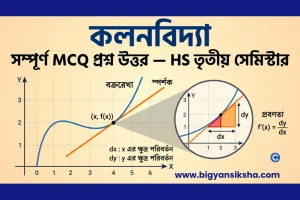 WBCHSE দ্বাদশ শ্রেণি তৃতীয় সেমিস্টার গণিতের কলনবিদ্যা প্রশ্ন উত্তর অধ্যায়ের ৯০টি MCQ প্রশ্নের সম্পূর্ণ সমাধানসহ উত্তর — সন্ততা, অন্তরকলনযোগ্যতা, অন্তরকলন কৌশল ও প্রয়োগ কলনবিদ্যা প্রশ্ন উত্তর (Calculus) সম্পূর্ণ MCQ — HS তৃতীয় সেমিস্টার গণিত উচ্চ মাধ্যমিক দ্বাদশ শ্রেণির তৃতীয় সেমিস্টার গণিত পরীক্ষায় কলনবিদ্যা প্রশ্ন উত্তর (Calculus) সবচেয়ে বড় ও গুরুত্বপূর্ণ অধ্যায় — সন্ততা (continuity), অন্তরকলনযোগ্যতা …
 - ম্যাট্রিক্স ও নির্ণায়ক প্রশ্ন উত্তর (Matrices and Determinants) MCQ প্রশ্ন— HS তৃতীয় সেমিস্টার গণিত
 WBCHSE দ্বাদশ শ্রেণি তৃতীয় সেমিস্টার গণিতের ম্যাট্রিক্স ও নির্ণায়ক প্রশ্ন উত্তর, এই অধ্যায়ের ৬৮টি MCQ প্রশ্নের সম্পূর্ণ সমাধানসহ উত্তর। ম্যাট্রিক্স ও নির্ণায়ক প্রশ্ন উত্তর (Matrices and Determinants) সম্পূর্ণ MCQ প্রশ্ন উত্তর উচ্চ মাধ্যমিক দ্বাদশ শ্রেণির তৃতীয় সেমিস্টার গণিত পরীক্ষায় ম্যাট্রিক্স ও নির্ণায়ক (Matrices and Determinants) অধ্যায় থেকে ম্যাট্রিক্সের ধর্ম, নির্ণায়কের বৈশিষ্ট্য, প্রতিসম/বিপ্রতিসম ম্যাট্রিক্স এবং রৈখিক …
 - বিপরীত ত্রিকোণমিতিক অপেক্ষক MCQ প্রশ্নোত্তর — HS তৃতীয় সেমিস্টার গণিত (WBCHSE 2026)
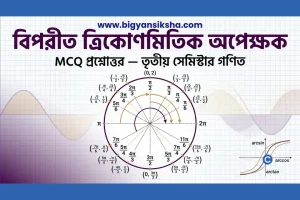 উচ্চমাধ্যমিক দ্বাদশ শ্রেণি তৃতীয় সেমিস্টার গণিতের বিপরীত ত্রিকোণমিতিক অপেক্ষক MCQ ও অ্যাসারশন-রিজন প্রশ্নোত্তর, ব্যাখ্যাসহ। WBCHSE সিলেবাস অনুযায়ী প্র্যাকটিসের জন্য আদর্শ। বিপরীত ত্রিকোণমিতিক অপেক্ষক MCQ (Inverse Trigonometric Functions) প্রশ্নোত্তর — উচ্চমাধ্যমিক তৃতীয় সেমিস্টার গণিত উচ্চমাধ্যমিক দ্বাদশ শ্রেণি তৃতীয় সেমিস্টার গণিতের দ্বিতীয় ইউনিট বিপরীত ত্রিকোণমিতিক অপেক্ষক (Inverse Trigonometric Functions) — এখানে সবচেয়ে বেশি ভুল হয় যোগ-বিয়োগের সূত্রে …
 - সম্বন্ধ ও অপেক্ষক MCQ প্রশ্নোত্তর — HS তৃতীয় সেমিস্টার গণিত (WBCHSE 2026)
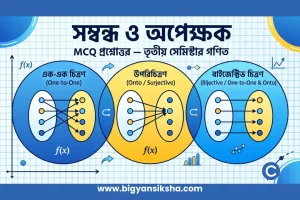 উচ্চমাধ্যমিক দ্বাদশ শ্রেণি তৃতীয় সেমিস্টার গণিতের সম্বন্ধ ও অপেক্ষক MCQ ও অ্যাসারশন-রিজন প্রশ্নোত্তর, ব্যাখ্যাসহ। WBCHSE সিলেবাস অনুযায়ী প্র্যাকটিসের জন্য আদর্শ। সম্বন্ধ ও অপেক্ষক MCQ (Relations and Functions) প্রশ্নোত্তর — উচ্চমাধ্যমিক তৃতীয় সেমিস্টার গণিত উচ্চমাধ্যমিক দ্বাদশ শ্রেণি তৃতীয় সেমিস্টার গণিতের সিলেবাসে সম্বন্ধ ও অপেক্ষক MCQ (Relations and Functions) অধ্যায়টা প্রথম ইউনিট হলেও এখানেই সবচেয়ে বেশি ছাত্রছাত্রী …
 - তড়িৎ চুম্বকীয় আবেশ ও পরিবর্তী প্রবাহ – HS 3rd Semester Physics MCQ প্রশ্নোত্তর
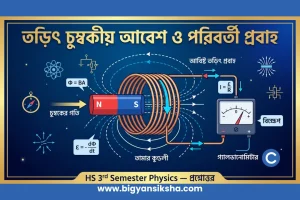 উচ্চমাধ্যমিক দ্বাদশ শ্রেণি তৃতীয় সেমিস্টার পদার্থবিদ্যার “তড়িৎ চুম্বকীয় আবেশ ও পরিবর্তী প্রবাহ” অধ্যায়ের প্রশ্ন উত্তরসহ। লেঞ্জের সূত্র, আবেশাঙ্ক, ট্রান্সফরমার, AC বর্তনী সংক্রান্ত সব প্রশ্ন এখানে। তড়িৎ চুম্বকীয় আবেশ ও পরিবর্তী প্রবাহ: HS 3rd Semester Physics প্রশ্নোত্তর তৃতীয় সেমিস্টারের পঞ্চম ও শেষ মূল ইউনিট তড়িৎ চুম্বকীয় আবেশ ও পরিবর্তী প্রবাহ — এখানে লেঞ্জের সূত্র, স্ব-আবেশ, পারস্পরিক …
 - তড়িৎচুম্বকীয় তরঙ্গ ও যোগাযোগ ব্যবস্থা – HS 3rd Semester Physics MCQ প্রশ্নোত্তর
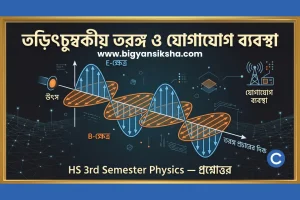 উচ্চমাধ্যমিক দ্বাদশ শ্রেণি তৃতীয় সেমিস্টার পদার্থবিদ্যার “তড়িৎচুম্বকীয় তরঙ্গ ও যোগাযোগ ব্যবস্থা” সংক্রান্ত মডেল প্রশ্নপত্রের প্রশ্ন উত্তরসহ তড়িৎচুম্বকীয় তরঙ্গ ও যোগাযোগ ব্যবস্থা: HS 3rd Semester Physics প্রশ্নোত্তর তৃতীয় সেমিস্টার পদার্থবিদ্যার সিলেবাসে তড়িৎচুম্বকীয় তরঙ্গ ও যোগাযোগ ব্যবস্থা টপিকটা মূল ৫টা ইউনিটের মতো আলাদা কোনো পূর্ণাঙ্গ Model Question Paper হিসেবে আসেনি — বরং সাধারণ মিশ্র মক টেস্ট (Set-I …