


PARTICIPIAL PREPOSITIONS in English Grammar
5 Essential Participial Prepositions You Need to Know
A participial preposition is a preposition that takes its origin from the participial form of a verb.
Examples:
considering, during, concerning, provided, following, including, excluding, assuming, regarding, given, notwithstanding, etc.
The participial prepositions are of two categories :
(1) PRESENT PARTICIPIAL PREPOSITIONS & (2) PAST PARTICIPIAL PREPOSITIONS.
The general grammatical features of a participial preposition are given below :
■ It is used to express relationships in time, manner, or condition.
■ It is usually formed from the participle of a verb.
■ Although a participle, it acts a preposition, and never as an adjective.
■ Like all other prepositions, it takes a noun word/noun phrase/ noun clause as its object.
Eg.
● They have many pets including dogs.
(The object of a participial preposition is a NOUN WORD “dog”)
● I asked him a question concerning his first experience on a foreign tour.
(The object of participial preposition is a NOUN PHRASE “his first experience of a foreign tour”)
● Provided they arrive on time, we can start the meeting promptly.
(Object of participial preposition is a NOUN CLAUSE “they arrive on time”)
■ It shows a verb form ending with “–ing” or “– en” or “— ed”.
■ In certain cases, it can also be used as a POSTPOSITION. ( eg. notwithstanding )
■ A participial prepositional phrase will end with a comma if a sentence starts with this phrase.
Eg. Considering his age, he still looks young.
On the other hand, the participial phrase will not take any comma if a sentence ends with the phrase.
Eg. He still looks young considering his age.
••••••••••••••••••••••••••••••••••••••
10 Powerful Ways to Use Participial Prepositions
GRAMMATICAL MEANINGS OF “PRESENT PARTICIPIAL PREPOSITIONS” WITH EXAMPLES :
(1) CONSIDERING — indicates that something will be taken into account
Eg.
● Considering his age, he still manages to keep up with the younger players.
● Considering the quality of the food, the price is not high.
(2) REGARDING — indicates that something is related to another thing
Eg.
● Regarding the weather, it seems like rain is expected later.
● I asked him a question regarding his harsh comments.
● She said nothing regarding your request.
(3) CONCERNING — indicates to inform about something
Eg.
● I spoke to him concerning his behaviour.
● Concerning her studies, she always stays focused.
(4) FOLLOWING —- indicates an order of events/ actions
Eg.
● Following her advice, I decided to pursue a career in medicine.
● Following their agreements, they decided to raise the salary.
(5) INCLUDING — indicates that something is a part of a larger group
Eg.
● They have many pets including three cats.
● All living creatures including humans will perish if global warming is not solved.
(6) EXCLUDING — indicates that something is not a part of a larger group
Eg.
● The trip costs a thousand dollars excluding airfare.
● Almost everyone excluding the children was asked to leave the park.
(7) ASSUMING — indicates that something is accepted as true without any proof
Eg.
● Assuming that he is still alive, how old would he be now?
● Assuming the weather is fine, we can go to travel this evening.
(8) DURING — indicates when something happens
Eg.
● He helped me during my bad days.
● She works during the day and studies at night.
(9) NOTWITHSTANDING —- indicates despite something
Eg.
● The bad weather notwithstanding, the event was a great success.
(notwithstanding = participial postposition)
● Notwithstanding her pitfalls, I love her.
(Notwithstanding = participial preposition)
••••••••••••••••••••••••••••••••••••••
GRAMMATICAL MEANINGS OF “PAST PARTICIPIAL PREPOSITIONS” WITH EXAMPLES :
(1) GIVEN —- indicates that a particular situation is taken into account
Eg.
● Given her age, she is a fantastic yoga expert.
● Now calculate the mathematical value of “X”, given X is not equal to zero.
● Given the circumstances, we had no choice but to cancel the event.
● I was happy given the fact that I got great marks.
(2) PROVIDED — indicates that something will be taken into account in a particular condition
Eg.
● Provided they arrive on time, we can start the meeting promptly.
● The value of A will match with that of B provided both A and B are odd numbers.
…….Somranjan Pal
🅵🅰🆀
Q.1: What is a participial preposition?
Ans: A participial preposition is a type of preposition derived from the participial form of a verb. It is used to express relationships in time, manner, or condition, but it functions solely as a preposition rather than as an adjective. Examples include words like “considering,” “during,” and “provided.”
Q.2: How are participial prepositions categorized?
Ans: Participial prepositions fall into two main categories: Present Participial Prepositions and Past Participial Prepositions. Present participial prepositions are formed from the present participle of a verb (e.g., “considering,” “following”), while past participial prepositions come from the past participle (e.g., “given,” “provided”).
Q.3: Can participial prepositions take objects?
Ans: Yes, participial prepositions require an object, which can be a noun, a noun phrase, or a noun clause. For example Noun: “They have pets including dogs.”Noun Phrase: “I asked about his first day at work.”Noun Clause: “Provided they arrive on time, we can begin the meeting.”
Q.4: Do participial prepositional phrases follow specific punctuation rules?
Ans: Yes, when a sentence begins with a participial prepositional phrase, it is followed by a comma. For instance, “Considering his age, he still looks young.” However, if the phrase appears at the end, it doesn’t require a comma: “He still looks young considering his age.”
Q.5: What are some examples of commonly used participial prepositions?
Ans: Some frequently used participial prepositions and their meanings include:
Considering: Taking into account (e.g., “Considering the weather, we stayed indoors.”)
Regarding: Relating to something (e.g., “Regarding the project, all tasks are on schedule.”)
During: Denoting a period (e.g., “She studies during the night.”)
Following: Showing sequence (e.g., “Following her instructions, I completed the task.”)
READ MORE
MANY MODERN LINGUISTS HAVE CHANGED THE TRADITIONAL CONCEPT OF A SIMPLE SENTENCE

READ MORE
10 Easy Ways to Use Attributive Nouns in English Grammar

READ MORE
A COMPLETE CLASSIFICATION OF THE NON-FINITE SUBORDINATE CLAUSES IN ENGLISH GRAMMAR

READ MORE
3 Common Mistakes to Avoid When Using Inverted Syntax

READ MORE
Master Cleft Sentences: A Simple Guide to Improve Your English Grammar

- হ্যালোঅ্যালকেন হ্যালোঅ্যারিন রসায়ন – HS 3rd Semester Chemistry সম্পূর্ণ MCQ প্রশ্নোত্তর
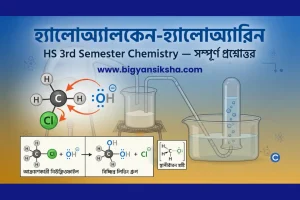 উচ্চমাধ্যমিক দ্বাদশ শ্রেণি তৃতীয় সেমিস্টার হ্যালোঅ্যালকেন হ্যালোঅ্যারিন রসায়ন অধ্যায়ের সবকটি MCQ প্রশ্ন উত্তরসহ। SN1, SN2, নিউক্লিওফিলিক প্রতিস্থাপন সংক্রান্ত সব প্রশ্ন এখানে। হ্যালোঅ্যালকেন হ্যালোঅ্যারিন রসায়ন: HS 3rd Semester Chemistry সম্পূর্ণ MCQ প্রশ্নোত্তর তৃতীয় সেমিস্টার রসায়নের জৈব অংশের প্রথম বড় অধ্যায় হ্যালোঅ্যালকেন-হ্যালোঅ্যারিন — এখানে SN1/SN2 বিক্রিয়া প্রক্রিয়া, নিউক্লিওফিলিক প্রতিস্থাপন, গ্রিনিয়ার্ড বিকারক এবং বিভিন্ন নামজাদা বিক্রিয়া (ফিনকেলস্টাইন, সোয়ার্টস, …
 - p ব্লক মৌল রসায়ন (P Block Elements) – HS 3rd Semester Chemistry সম্পূর্ণ MCQ প্রশ্নোত্তর
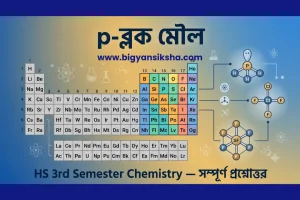 উচ্চমাধ্যমিক দ্বাদশ শ্রেণি তৃতীয় সেমিস্টার p ব্লক মৌল রসায়ন অধ্যায়ের সবকটি MCQ প্রশ্ন উত্তরসহ। নাইট্রোজেন পরিবার, হ্যালোজেন, নোবেল গ্যাস যৌগ সংক্রান্ত সব প্রশ্ন এখানে। p ব্লক মৌল রসায়ন: HS 3rd Semester Chemistry সম্পূর্ণ MCQ প্রশ্নোত্তর তৃতীয় সেমিস্টার রসায়নের p-ব্লক মৌল অধ্যায়টি নাইট্রোজেন পরিবার, অক্সিজেন পরিবার, হ্যালোজেন পরিবার এবং নোবেল গ্যাস যৌগ নিয়ে তৈরি — এই …
 - তরল অবস্থা রসায়ন (Liquid State) – HS 3rd Semester Chemistry সম্পূর্ণ MCQ প্রশ্নোত্তর
 উচ্চমাধ্যমিক দ্বাদশ শ্রেণি তৃতীয় সেমিস্টার তরল অবস্থা রসায়ন অধ্যায়ের সবকটি MCQ প্রশ্ন উত্তরসহ। হেনরির সূত্র, রাউল্টের সূত্র, সংখ্যাগত ধর্ম সংক্রান্ত সব প্রশ্ন এখানে। তরল অবস্থা রসায়ন: HS 3rd Semester Chemistry সম্পূর্ণ MCQ প্রশ্নোত্তর উচ্চমাধ্যমিক দ্বাদশ শ্রেণি তৃতীয় সেমিস্টার রসায়নের তরল অবস্থা (Liquid State) অধ্যায়টি সংখ্যাগত ধর্ম (Colligative Properties) দিয়ে ভরপুর — হেনরির সূত্র, রাউল্টের সূত্র, …
 - HS তৃতীয় সেমিস্টার গণিত মডেল প্রশ্নপত্র SET-I সমাধান — সব অধ্যায় মিলিয়ে ৪০ নম্বরের মক টেস্ট
 WBCHSE দ্বাদশ শ্রেণি HS তৃতীয় সেমিস্টার গণিত মডেল প্রশ্নপত্র (SET-I) — সম্বন্ধ-অপেক্ষক থেকে সম্ভাবনাতত্ত্ব পর্যন্ত সব টপিক মিলিয়ে ৪০টি MCQ প্রশ্নের সম্পূর্ণ সমাধান। HS তৃতীয় সেমিস্টার গণিত মডেল প্রশ্নপত্র (SET-I) সম্পূর্ণ সমাধান উচ্চ মাধ্যমিক দ্বাদশ শ্রেণির HS তৃতীয় সেমিস্টার গণিত মডেল প্রশ্নপত্র, পরীক্ষার প্রকৃত ধরন বোঝার জন্য এই মিশ্র-টপিক মডেল প্রশ্নপত্র (SET-I, পূর্ণমান ৪০) — …
 - সম্ভাবনাতত্ত্ব প্রশ্ন উত্তর (Probability) MCQ — HS তৃতীয় সেমিস্টার গণিত
 WBCHSE দ্বাদশ শ্রেণি তৃতীয় সেমিস্টার গণিতের সম্ভাবনাতত্ত্ব প্রশ্ন উত্তর অধ্যায়ের ৩৫টি MCQ প্রশ্নের সম্পূর্ণ সমাধানসহ উত্তর — শর্তাধীন সম্ভাবনা, বেইজ উপপাদ্য, প্রত্যাশিত মান। সম্ভাবনাতত্ত্ব প্রশ্ন উত্তর (Probability) সম্পূর্ণ MCQ — HS তৃতীয় সেমিস্টার গণিত উচ্চ মাধ্যমিক দ্বাদশ শ্রেণির তৃতীয় সেমিস্টার গণিত পরীক্ষায় সম্ভাবনাতত্ত্ব প্রশ্ন উত্তর (Probability) অধ্যায় থেকে শর্তাধীন সম্ভাবনা (conditional probability), স্বাধীন ঘটনা (independent …
 - কলনবিদ্যা প্রশ্ন উত্তর (Calculus) MCQ — HS তৃতীয় সেমিস্টার গণিত (সন্ততা, অন্তরকলন, প্রয়োগ)
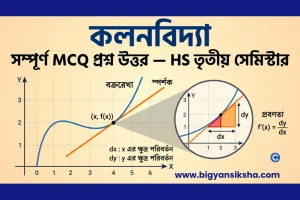 WBCHSE দ্বাদশ শ্রেণি তৃতীয় সেমিস্টার গণিতের কলনবিদ্যা প্রশ্ন উত্তর অধ্যায়ের ৯০টি MCQ প্রশ্নের সম্পূর্ণ সমাধানসহ উত্তর — সন্ততা, অন্তরকলনযোগ্যতা, অন্তরকলন কৌশল ও প্রয়োগ কলনবিদ্যা প্রশ্ন উত্তর (Calculus) সম্পূর্ণ MCQ — HS তৃতীয় সেমিস্টার গণিত উচ্চ মাধ্যমিক দ্বাদশ শ্রেণির তৃতীয় সেমিস্টার গণিত পরীক্ষায় কলনবিদ্যা প্রশ্ন উত্তর (Calculus) সবচেয়ে বড় ও গুরুত্বপূর্ণ অধ্যায় — সন্ততা (continuity), অন্তরকলনযোগ্যতা …